
One of the most common questions I hear from parents is, “How much pocket money should I be giving my child?” It’s a simple question with a complex answer, especially in 2026, where the cost of living and the shift to digital money have changed the landscape.
Pocket money isn’t just a weekly handout; it’s a child’s first “salary.” It’s the training ground where they learn the difference between a fleeting whim and a long-term goal. At The Financial Fairy Tales, we believe that the amount of pocket money is less important than the lessons it teaches.
The 2026 “Going Rate”
While every family’s budget is different, recent data suggests the average weekly pocket money in the UK varies significantly by age. Here is a general guide to help you benchmark:
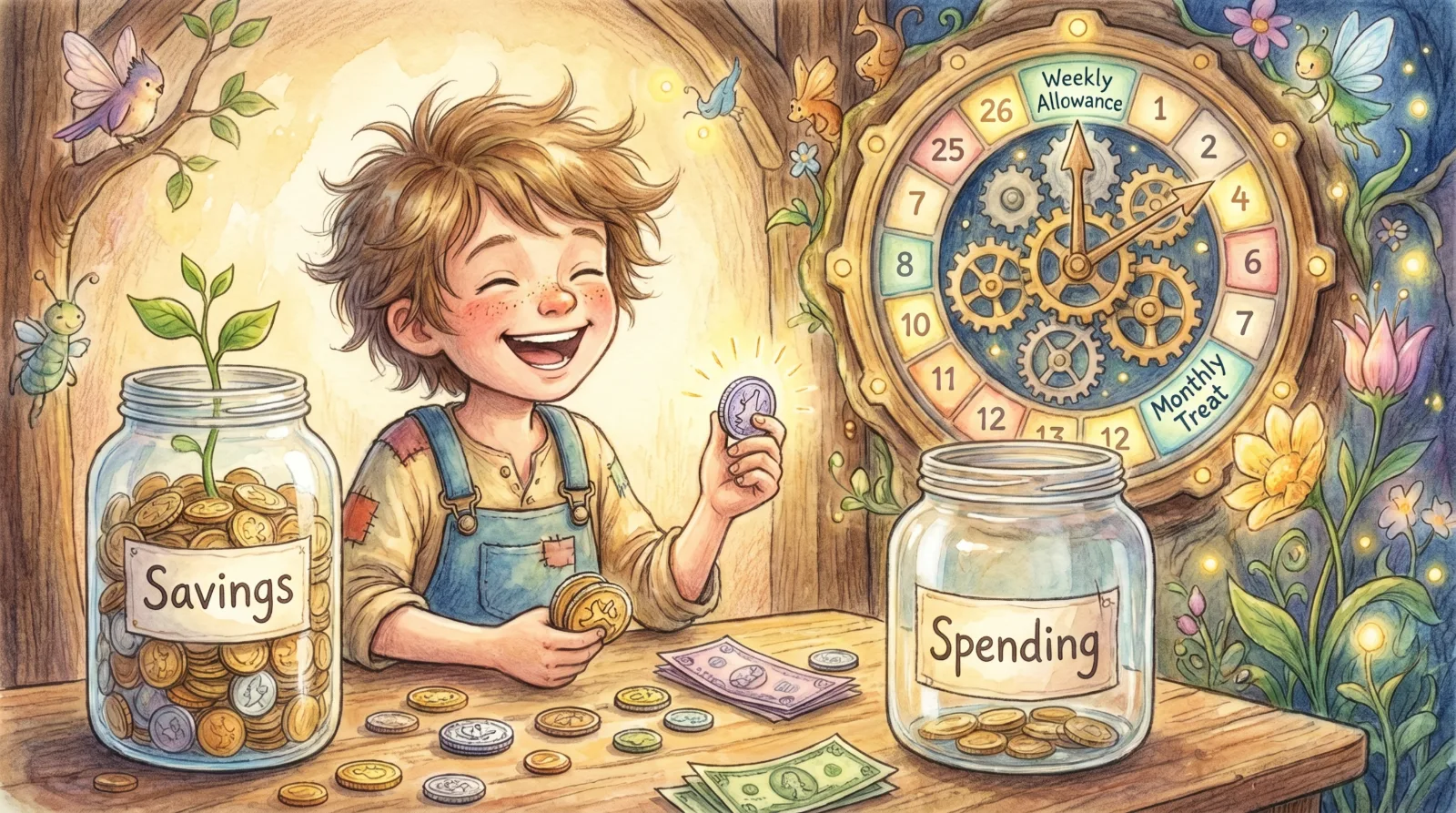
•Ages 5-7: £2 – £4 per week. At this age, the focus is on the physical act of saving. The “Three Jars” method (Spend, Save, Give) is highly effective here.
•Ages 8-11: £5 – £8 per week. Children in this bracket are starting to understand the value of money and can save for larger items, like a new toy or game.
•Ages 12-15: £10 – £15 per week. This is often when digital pocket money apps become useful, teaching them to manage a balance and track spending.
Average pocket money by age in the UK (2026)
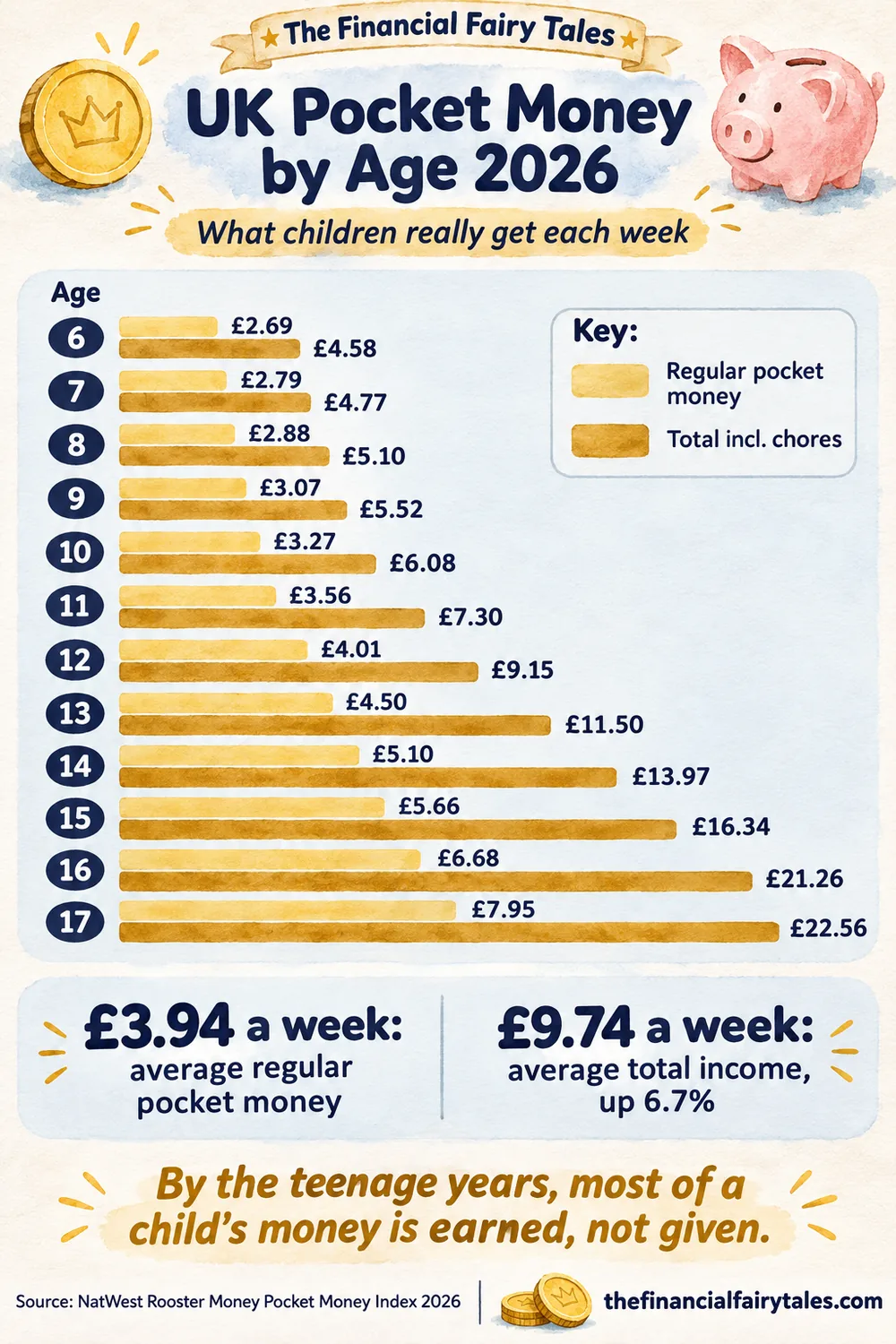
The latest figures come from NatWest Rooster Money’s 2026 Pocket Money Index, based on more than half a million children using the Rooster Card between March 2025 and February 2026. “Regular” is the fixed weekly allowance; “total” adds money earned from chores, rewards and one-off boosts.
| Age | Regular weekly pocket money | Total weekly income (incl. chores) |
|---|---|---|
| 6 | £2.69 | £4.58 |
| 7 | £2.79 | £4.77 |
| 8 | £2.88 | £5.10 |
| 9 | £3.07 | £5.52 |
| 10 | £3.27 | £6.08 |
| 11 | £3.56 | £7.30 |
| 12 | £4.01 | £9.15 |
| 13 | £4.50 | £11.50 |
| 14 | £5.10 | £13.97 |
| 15 | £5.66 | £16.34 |
| 16 | £6.68 | £21.26 |
| 17 | £7.95 | £22.56 |
Across all ages, the average child receives £3.94 a week in regular pocket money and £9.74 a week in total, up 6.7% on last year. GoHenry’s mid-2026 report shows a similar pattern, with averages rising from about £4.30 a week at age 7 to £18.61 at 17.
The big jump between the two columns is the interesting part: by the teenage years, most of a child’s money is earned, not given.
How Often Should You Give It?
Consistency is key. Whether you choose weekly or monthly, stick to the schedule. Weekly is generally better for younger children, as a month is a very long time in the mind of a seven-year-old. For teenagers, a monthly allowance can teach them how to budget over a longer period, mimicking a real-world salary.
The “Earned” vs. “Given” Debate
Should pocket money be tied to chores? This is a personal choice, but a hybrid approach often works best. Provide a small, unconditional base amount to teach basic money management, and offer opportunities to “earn” extra through specific tasks. This introduces the concept of enterprise and hard work, a core theme in our story, The Magic Magpie.
The Real Value of Pocket Money
The true value of pocket money lies in the mistakes children make with it. If they spend all their money on sweets on Monday and have nothing left for the cinema on Saturday, they learn a powerful lesson in budgeting. It’s much better they make a £5 mistake at age eight than a £5,000 mistake at age twenty-eight.
By using pocket money as a teaching tool, you are moving them from a “consumer mindset” to a “wealth-creator mindset,” ensuring they learn before they earn.
Pocket money FAQs
What is the average pocket money in the UK in 2026?
£3.94 a week in regular pocket money, or £9.74 a week once chores and rewards are included (NatWest Rooster Money, 2026).
How much pocket money should a 15-year-old get?
The average 15-year-old gets £5.66 a week in regular pocket money and £16.34 in total. Many families give a modest base amount and let teenagers earn the rest, which is good practice for a first job.
How much pocket money should a 10-year-old get?
Around £3.27 a week regular, or about £6 including chores. At this age, what matters most is that they save towards something they really want.
What age should children start getting pocket money?
Most families start between five and seven, once a child can count coins and understands that money runs out. Starting small and weekly works best.
Should pocket money be paid for chores?
It’s your call. A third of families with a fixed routine (34.8%) make it conditional on chores. See “The Earned vs. Given Debate” above for the hybrid approach I recommend.
Sources: NatWest Rooster Money Pocket Money Index 2026; GoHenry Pocket Money Unwrapped, Mid-Year 2026.
Want more tools to build healthy habits? Our Financial Fairy Tales: Activity Book is filled with games and charts designed to make saving a fun and rewarding part of every child’s life.
Read next: jobs for kids: 30 ways children can earn money, by age, pocket money: how much, how often and when to start, why pocket money matters, and how to explain business to kids.
Pingback: Beyond the Piggy Bank: Introducing the Concept of Investing to Children - The Financial Fairy Tales Blog The Financial Fairy Tales Blog
Pingback: The Teenager’s Guide to Financial Independence: Preparing for Life Beyond Home - The Financial Fairy Tales Blog